Small computers. Serious engineering.
Inside every useful device is a small computer that has to read sensors, make a decision and drive something, on a power budget, without anyone rebooting it. We design that layer: the board, the firmware and the way they behave when conditions are bad.
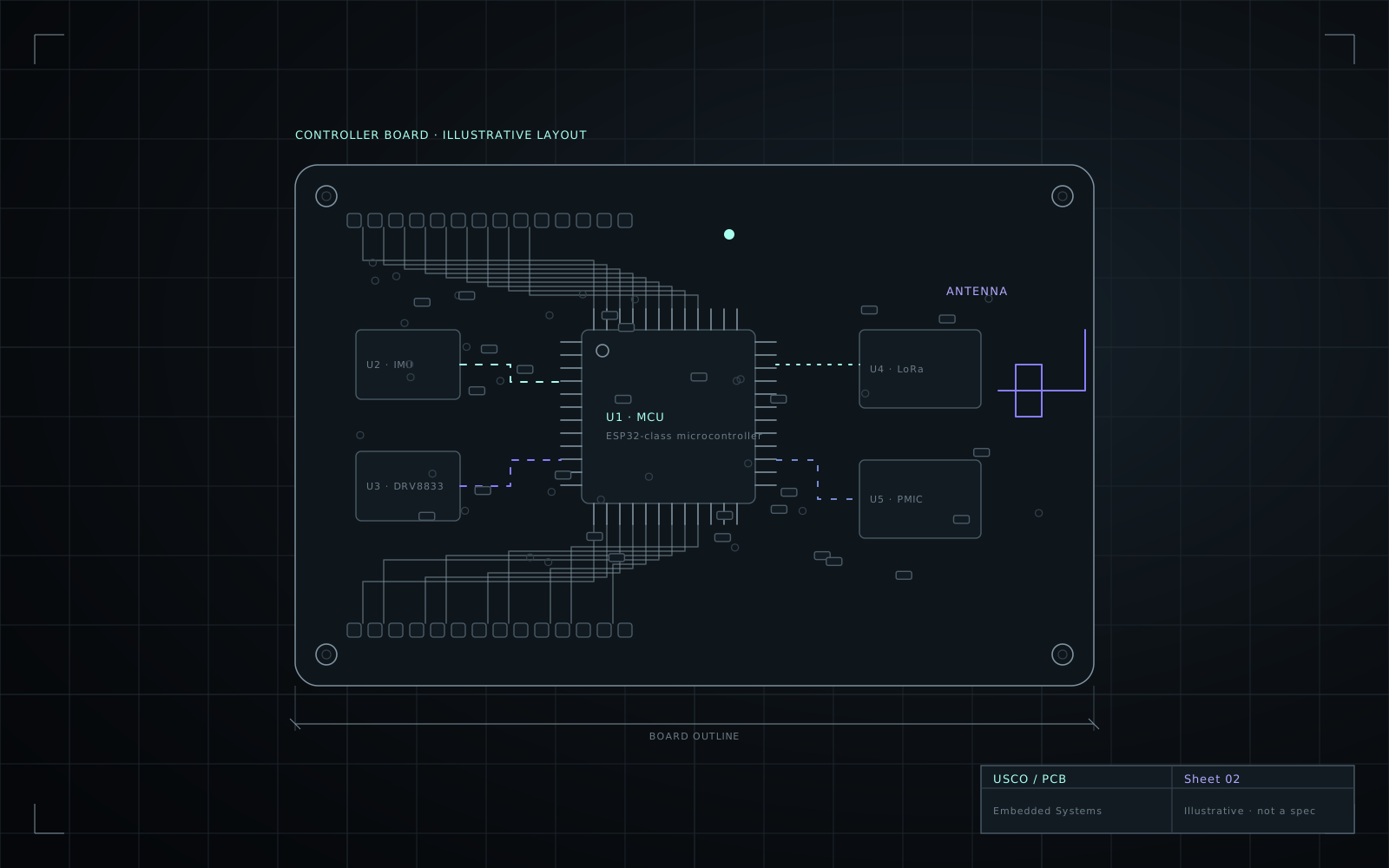
What we build.
Specific things we design, build and test in this discipline.
Firmware
Structured C/C++ firmware on ESP32, Arduino-class and similar microcontrollers: state machines, interrupts, watchdogs and clean recovery.
Custom electronics
Schematic and PCB design, component selection around what can actually be sourced, bring-up and debugging on real boards.
Sensors and actuators
IMUs, cameras, distance, environmental and biosignal sensing, plus motor, relay and valve drive stages.
Power-aware design
Sleep modes, duty cycling, solar and battery budgets, brown-out handling. Designed for unreliable mains from the first sketch.
Communications
Wi-Fi, Bluetooth, LoRa-class radio, GSM and wired buses, with store-and-forward when the link drops.
Edge intelligence
Models small enough to run on the device, so decisions do not wait for a network that may not be there.
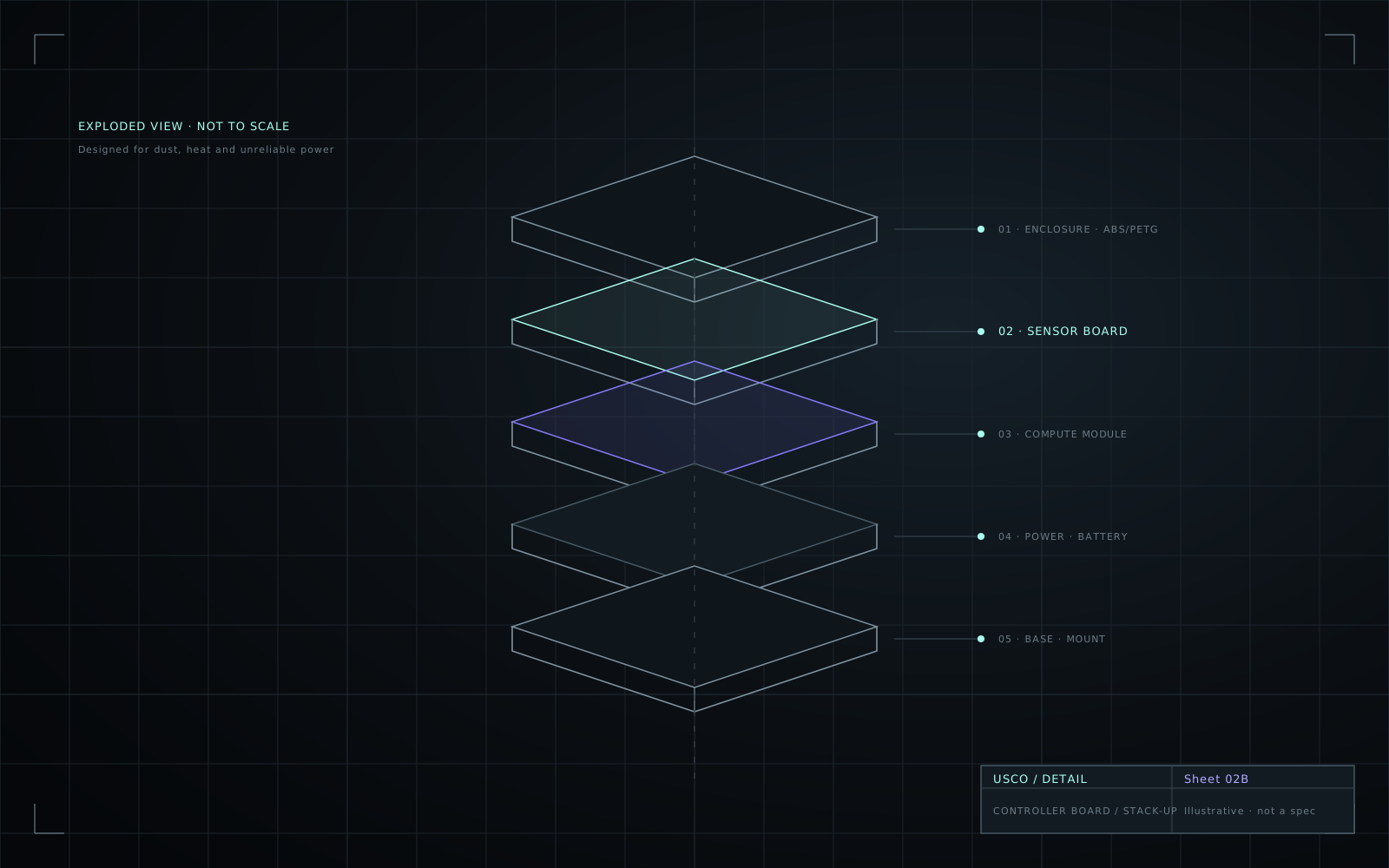 CONTROLLER BOARD / STACK-UP
Hardware you can debug.
Test points, status LEDs, serial logging and a documented pinout are not extras. They are what let a product be fixed in the field. We build every board so the next engineer can open it and understand it.
From requirements to a board that survives the field.
Requirements and budget
Inputs, outputs, timing, power and cost, written down and agreed.
Breadboard to prototype
Prove each sensor and driver on dev boards before committing to a PCB.
Board and firmware
Layout, assembly and firmware developed together so each can be tested against the other.
Soak and fault testing
Long runs, brown-outs, bad inputs and disconnected sensors. The firmware has to handle all of it.
What it is built with.
Tools and platforms we choose from, picked per project, never by habit.
- Microcontrollers
- ESP32, Arduino-class boards and comparable MCUs
- Edge computers
- Raspberry Pi and other single-board computers that support edge AI
- Interfaces
- I²C, SPI, UART, CAN-style buses, ADC, PWM
- Radio
- Wi-Fi, BLE, LoRa-class, GSM
- Tooling
- KiCad-class PCB design, logic analyser, oscilloscope, bench supplies
Evidence, not adjectives.
Projects where this capability is documented, with their real stage.
Design for the worst hour, not the best demo.
The device that matters is the one still behaving after a power dip, a loose wire and a dusty week. We test for that hour before it arrives.