What were we trying to solve?
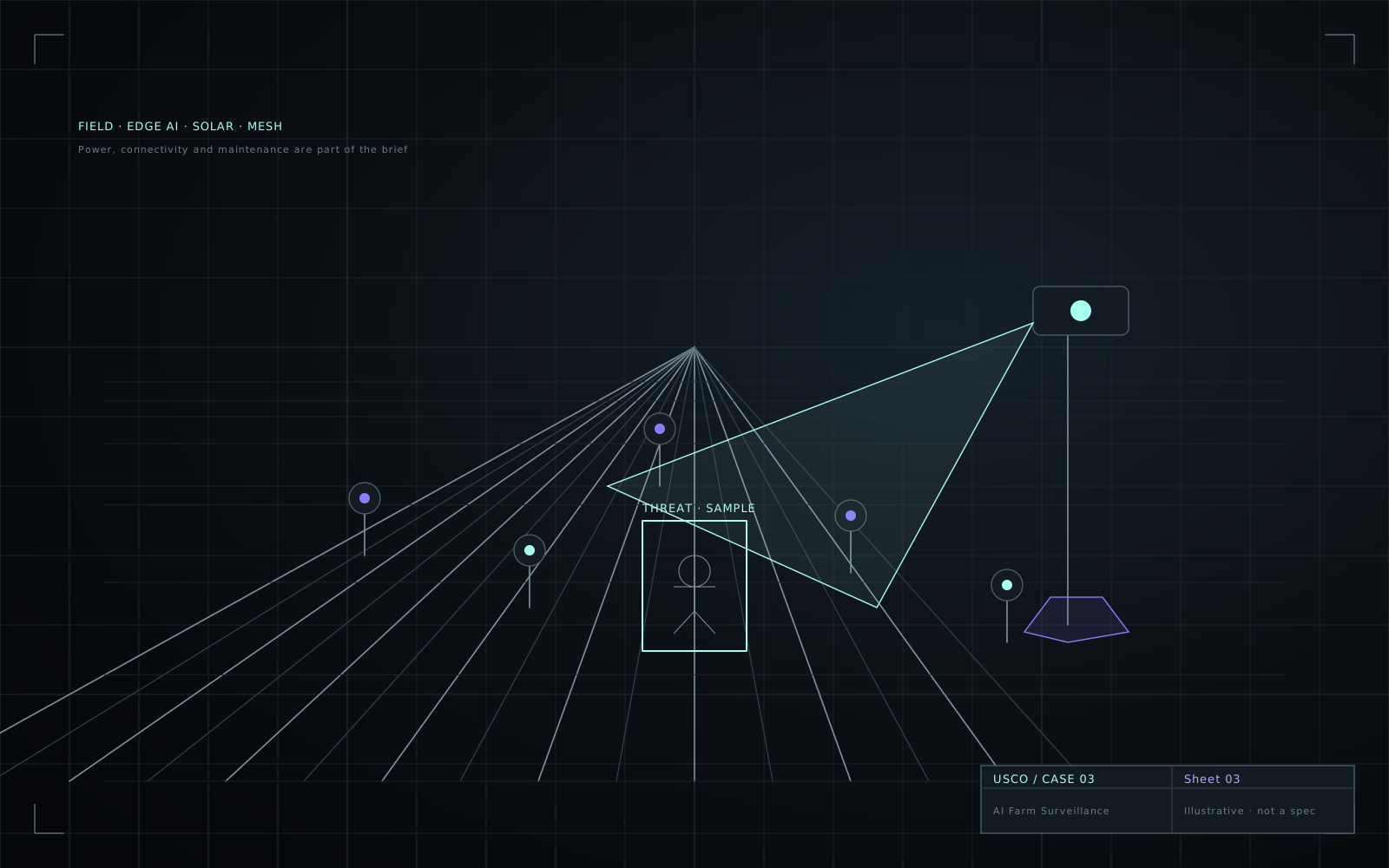
Large or remote farms are hard to monitor consistently. Threats include intrusion, animals and other events requiring attention, and continuous manual observation is expensive or impractical.
02 / THE APPROACHArchitecture before components.
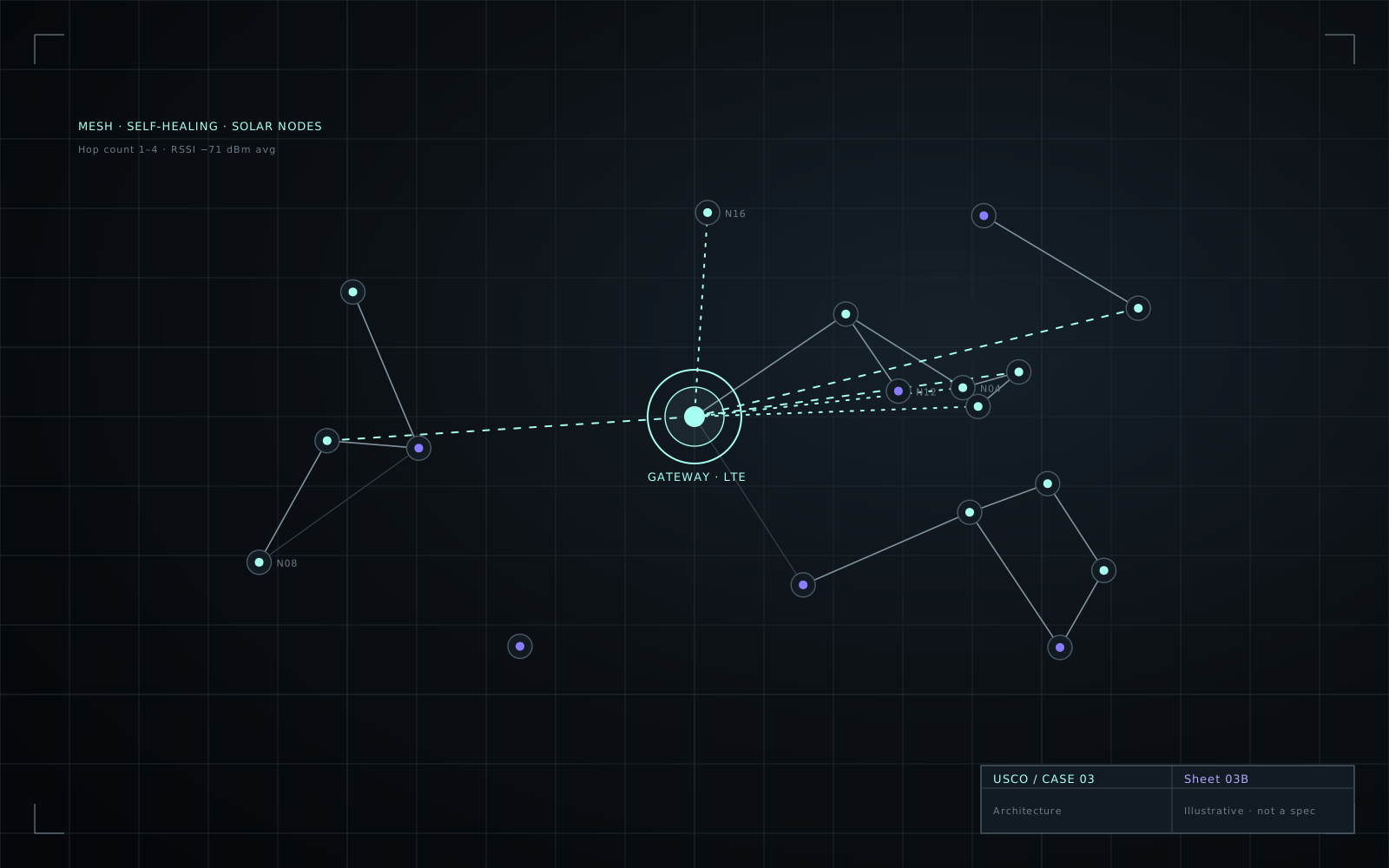
Camera nodes run vision models at the edge, so detection does not depend on the internet. Events are passed across a mesh of nodes to a gateway that sends alerts. The system is designed for solar-compatible, power-aware operation.
03 / THE BUILDWhere the engineering became physical.
The real engineering challenge was the system, not the model: keeping power budgets honest, handling weather and dust, keeping the mesh alive when a node drops and keeping alerts meaningful rather than noisy.
Did it actually work?
During field trials, the system recorded 98% accuracy on the defined threat-identification test set. That is a result on a specific test set, not a guarantee for every environment; the underlying test records are being compiled into a documented report.
05 / WHAT NEXTThe honest next step.
A documented test report (events, false alarms, misses, duration), longer field deployments and packaging for repeatable installation.