What were we trying to solve?
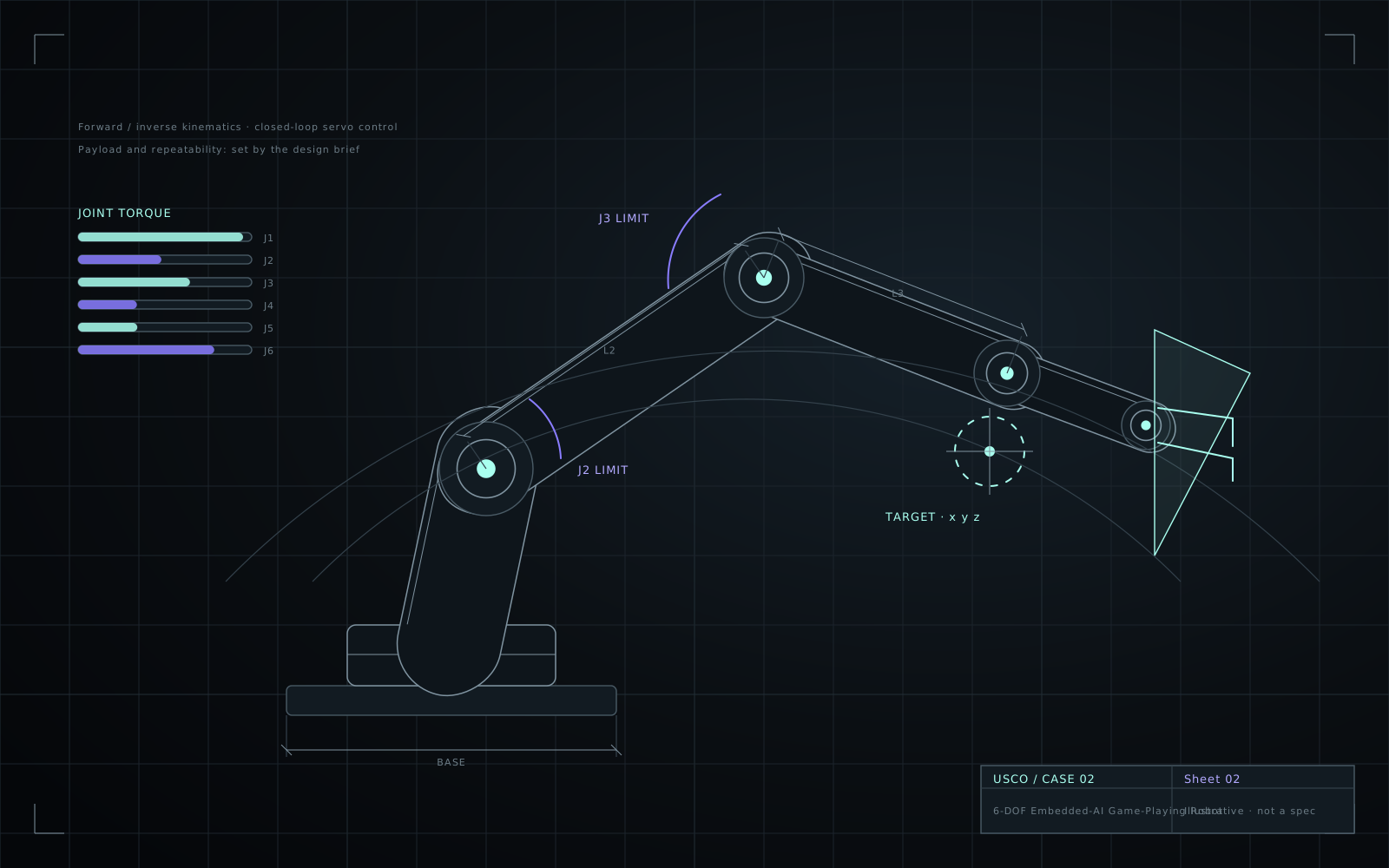
A robot that plays a board game has to connect several systems reliably: perceive the board, interpret the current state, select a legal move, translate it into motion and place a piece without losing alignment.
02 / THE APPROACHArchitecture before components.
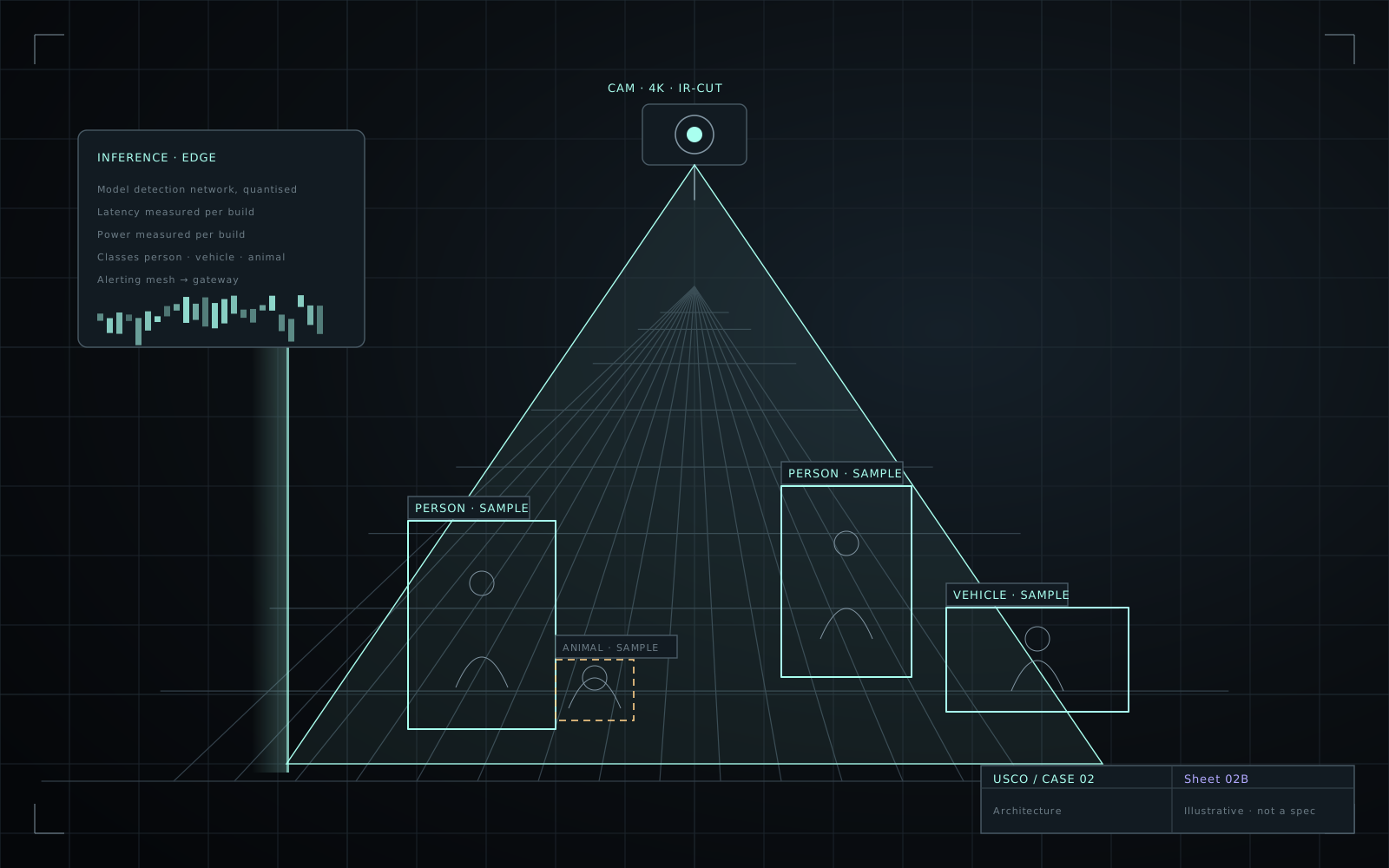
A computer-vision layer observes the board, a decision layer selects the move, and a motion-control layer converts that decision into coordinates and a pick-and-place sequence. The same concept has been explored across chess and other board games such as Ayo and draughts.
03 / THE BUILDWhere the engineering became physical.
The engineering sits at the boundaries: board calibration, state interpretation, move-to-coordinate mapping, arm positioning and repeatable pick-and-place with a gripper.
Did it actually work?
A functional demonstration has been built. It is presented as a demonstrator, not a production-certified robot. Move accuracy, cycle time and long-run reliability are not claimed until the test data is documented.
05 / WHAT NEXTThe honest next step.
Documented repeatability and cycle-time tests, and adaptation of the same pipeline to pick-and-place and sorting tasks.