Explore the uncertain. Build enough to learn.
Some questions cannot be answered on paper. We build the smallest experiment that can answer them, measure honestly and write down what we learned, including when the answer is no.
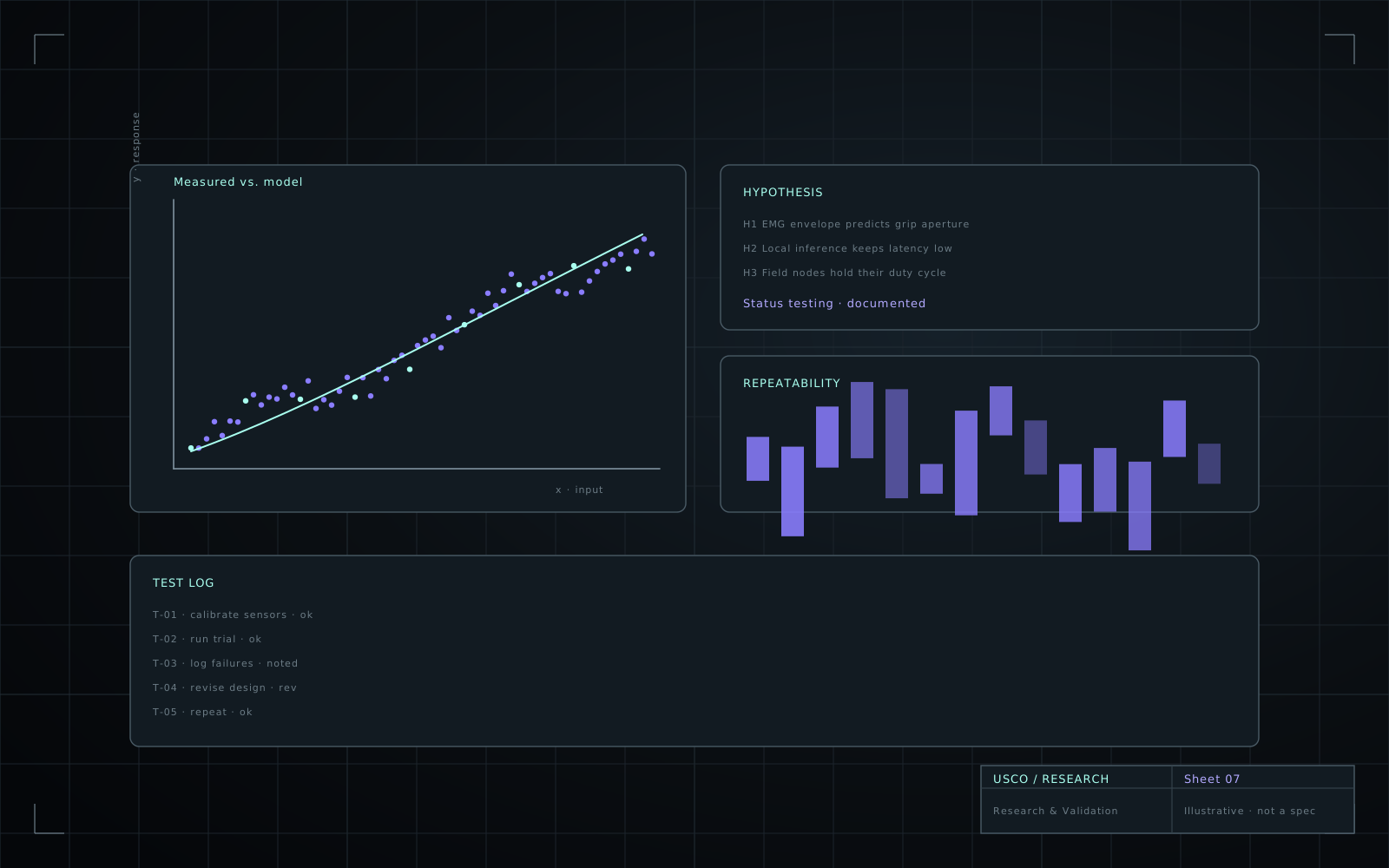
What we build.
Specific things we design, build and test in this discipline.
Proof-of-concept builds
A working experiment that shows whether an idea holds before serious money is committed.
Technical validation
Independent testing of a design, a component or a claim, with the method written down.
Biosignal interfaces
EMG and related inputs for control and assistive applications, kept clearly in the research category.
Embedded and local AI
What can run on small, low-power hardware, and where the limits are.
University collaboration
Joint experiments, shared rigs and student-facing research projects.
Research hardware
Multi-axis arms and test rigs for labs that need to study motion, control and interaction.
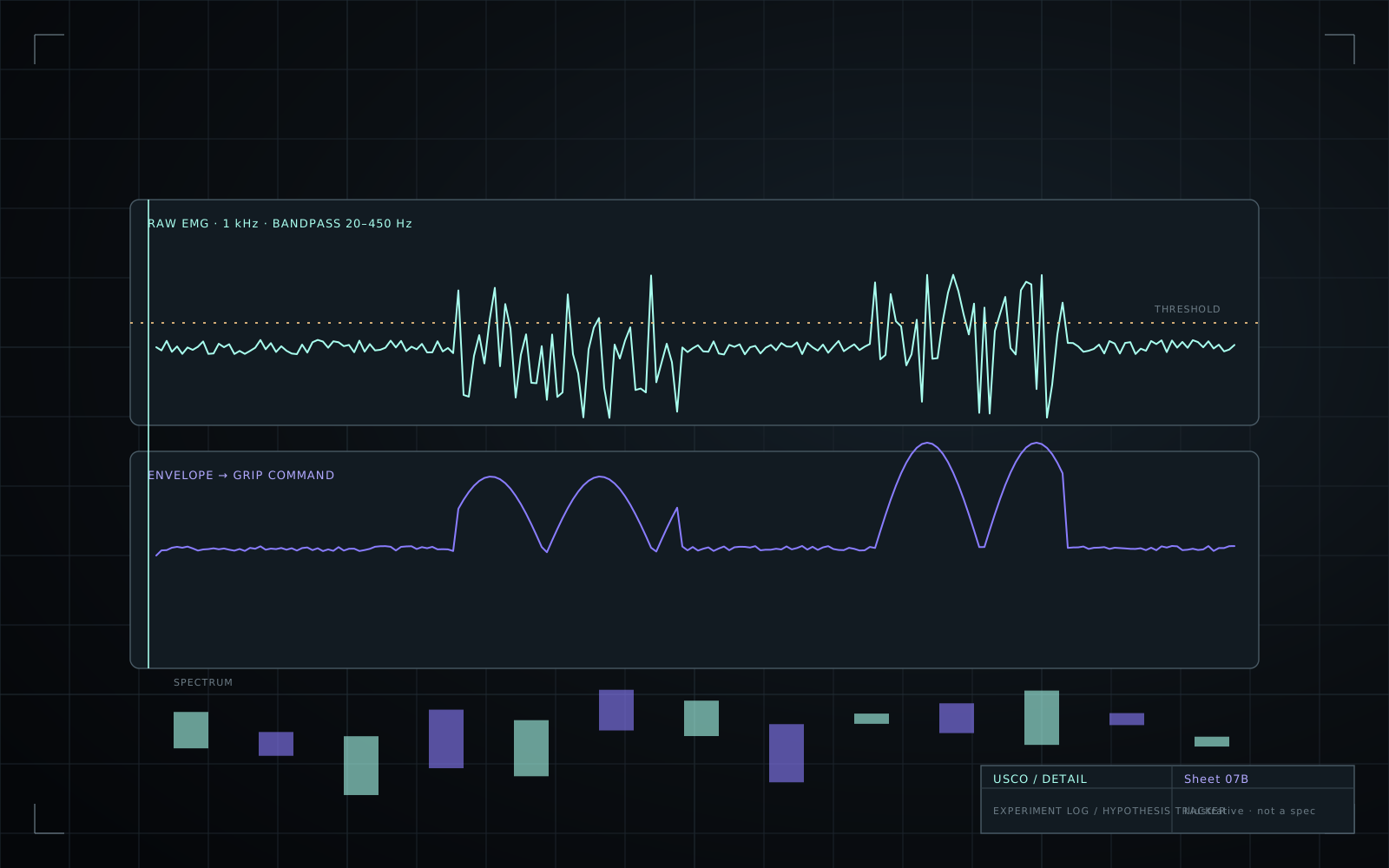 EXPERIMENT LOG / HYPOTHESIS TRACKER
Method before conclusion.
We write the hypothesis, the test and the success threshold before the experiment runs. That is what makes a result worth believing, whichever way it falls.
From a question to evidence you can use.
State the question
One question, one measurable answer, one threshold for success.
Design the experiment
The smallest rig and dataset that can answer it fairly.
Run and record
Repeat the test, log everything including the failures.
Report plainly
What was tested, what was found, what it does not show and what to try next.
What it is built with.
Tools and platforms we choose from, picked per project, never by habit.
- Rigs
- Instrumented test benches, arms and sensor rigs
- Data
- Logging, versioned datasets, repeatable analysis
- Methods
- Controlled comparison, repeatability and error analysis
- Output
- Short technical reports with raw data on request
- Status labels
- Concept, demonstrated, field-tested, deployed. Always stated
Evidence, not adjectives.
Projects where this capability is documented, with their real stage.
Show the work. Then make the claim.
If we cannot show how a number was produced, we do not publish it. That discipline is the difference between research and a brochure.