What were we trying to solve?
Assistive technology only helps when control, mechanics and the user's intent line up. Building even a demonstrator means coordinating signal acquisition, processing, embedded control, actuation and a mechanical structure that can be printed and iterated.
02 / THE APPROACHArchitecture before components.
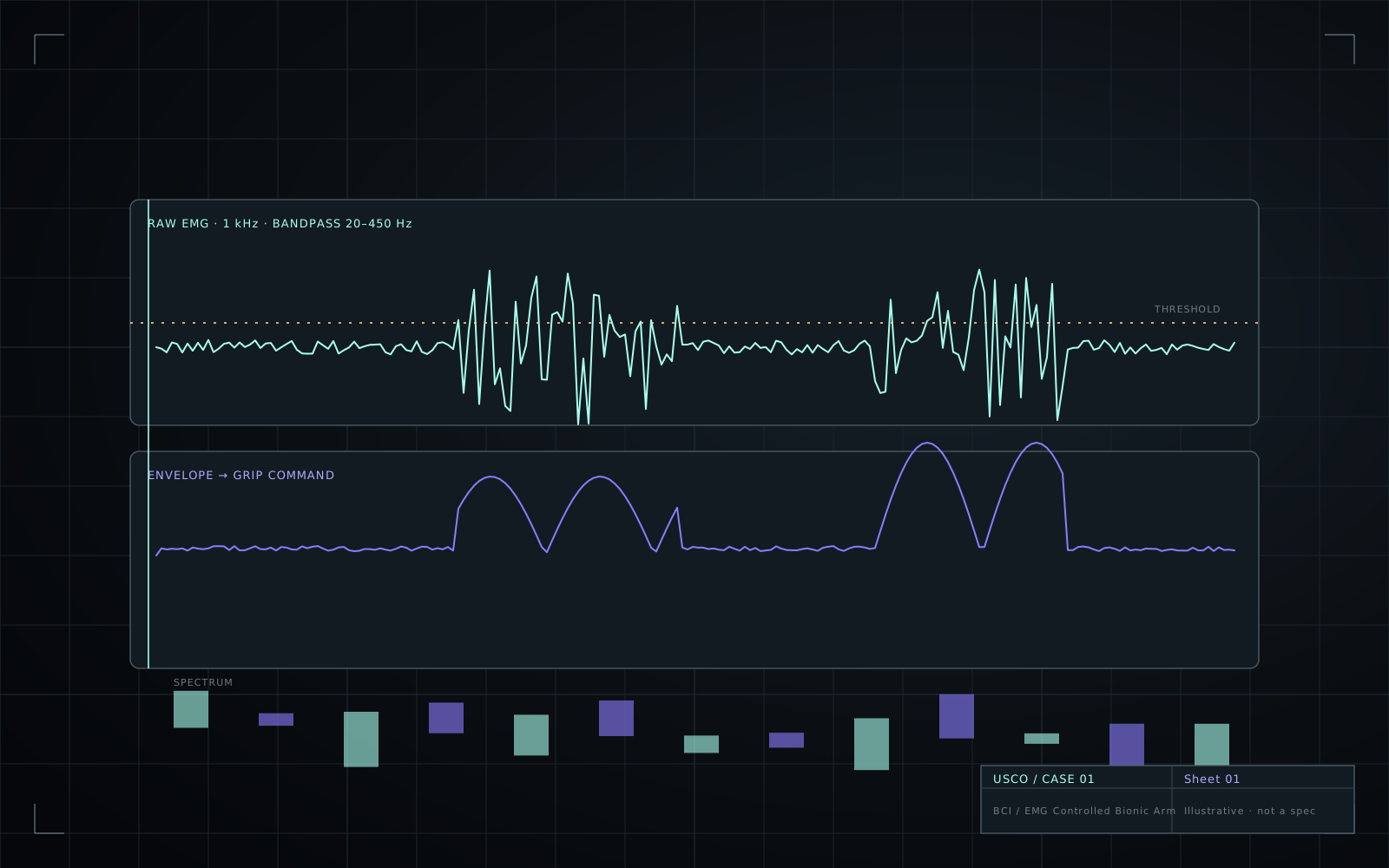
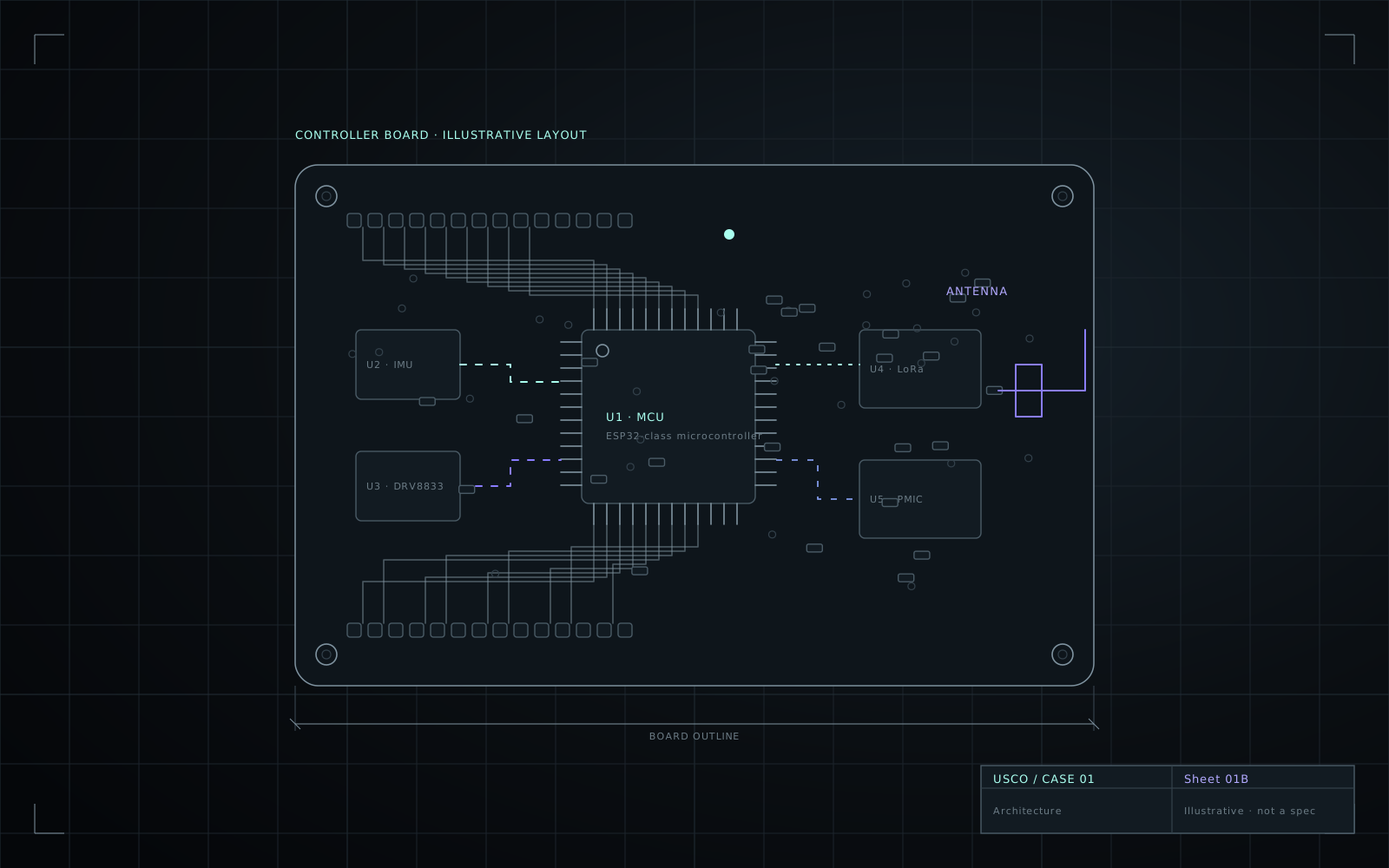
We split the system into a signal chain and a motion chain. The signal chain acquires and filters biosignals, extracts a control envelope and maps it to a command. The motion chain turns commands into joint movement using embedded control and servo or motor drives, inside a 3D-printed structure we can revise quickly.
03 / THE BUILDWhere the engineering became physical.
The hard parts sit at the boundaries: electrode placement and noise, mapping a noisy signal to a stable grip command, and packaging electronics inside a limb-sized structure. Each of these was iterated on the bench.
Did it actually work?
A functional demonstration has been built. USCO is awaiting approval for test trials and full deployment. The arm is not described as a clinically validated prosthesis or an approved medical product, and quantified performance figures are not claimed until test data is documented.
05 / WHAT NEXTThe honest next step.
Approval for supervised test trials, documented signal-to-grip performance, and user-centred refinement of the mechanics.