An IoT device looks simple: a sensor, a chip, a radio. The work is in everything around it. A device that must run for months, in heat, on bad power and a poor network, is a different engineering problem from a bench prototype.
1. Start with the power budget
Write down how long the device must run and from what: battery, mains or solar. Then calculate average current, not peak. Most designs are won by sleeping: wake, measure, transmit, sleep again. The radio is usually the biggest consumer.
2. Choose sensors for the environment
Dust, humidity and heat change readings and kill parts. Choose sensors rated for the real site, and plan calibration.
3. Write firmware that expects failure
Use watchdogs, handle a missing sensor without hanging, and recover cleanly after a brown-out. Log why the last reset happened.
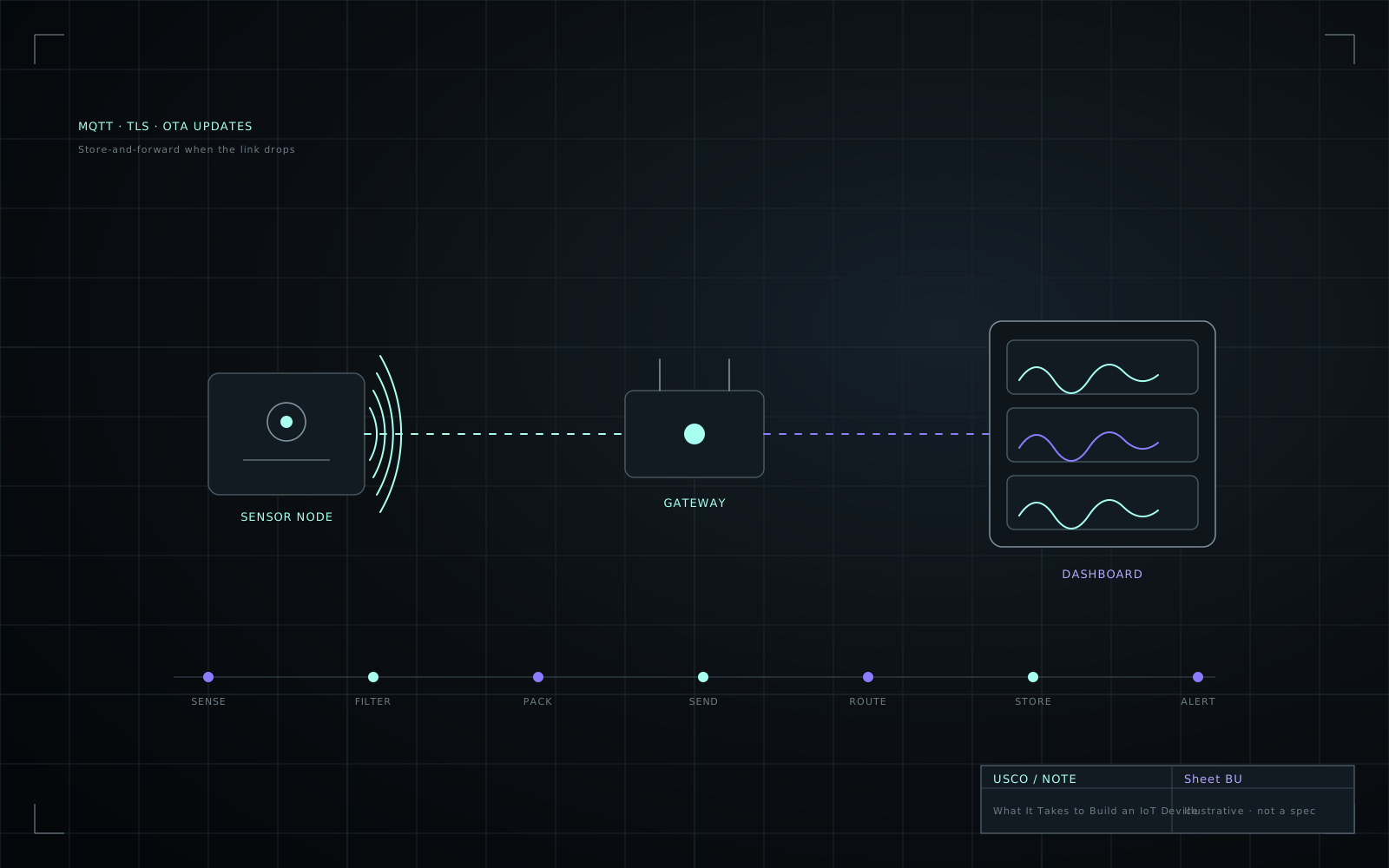
4. Design the connection for the bad day
Networks drop. Buffer readings locally, timestamp them and send the backlog when the link returns. Show gaps as gaps on the dashboard.
5. Plan updates and security from day one
Devices in the field need over-the-air updates that cannot brick them, and authentication so that only your devices talk to your server.
6. Make it fixable
Status lights, a serial log and a labelled enclosure save days of field work.