The value of a 3D printer is not the part it makes. It is the question it lets you answer in an afternoon: does this fit, can a hand reach this, does this bracket survive the vibration?
Use prints to answer questions
Print the enclosure to check that connectors line up and cables bend. Print the mount to see if the motor shakes. A rough print that answers a question beats a perfect render that does not.
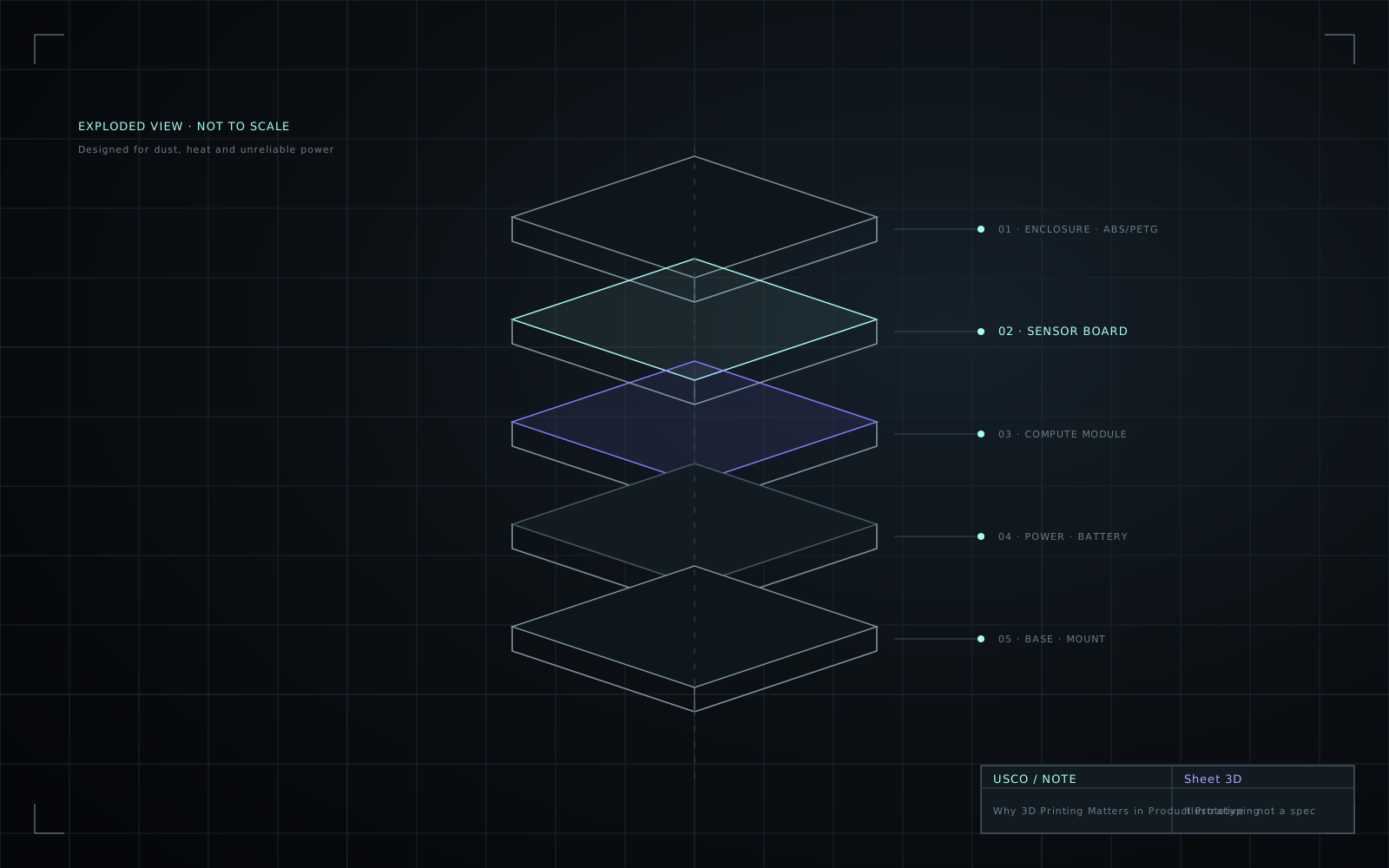
Pick the material for the job
PLA is easy and good for fit checks. PETG handles more heat and some flex. ABS and similar materials cope with higher temperatures but need more care to print well. Match the material to the test, not to the final product.
Design for printing
Orient parts so layers do not run across the load, avoid large unsupported overhangs and add tolerance for holes and slots. Print a small tolerance test first.
Know when to stop printing
Prints are for learning. When a design needs strength, finish or volume that printing cannot give, move to machined, moulded or sheet parts, and treat the print as the specification.
Keep a revision log
Label every part with a revision and note what changed. Hardware iteration only compounds if you remember what each version taught you.