Smart products that still work when the internet does not.
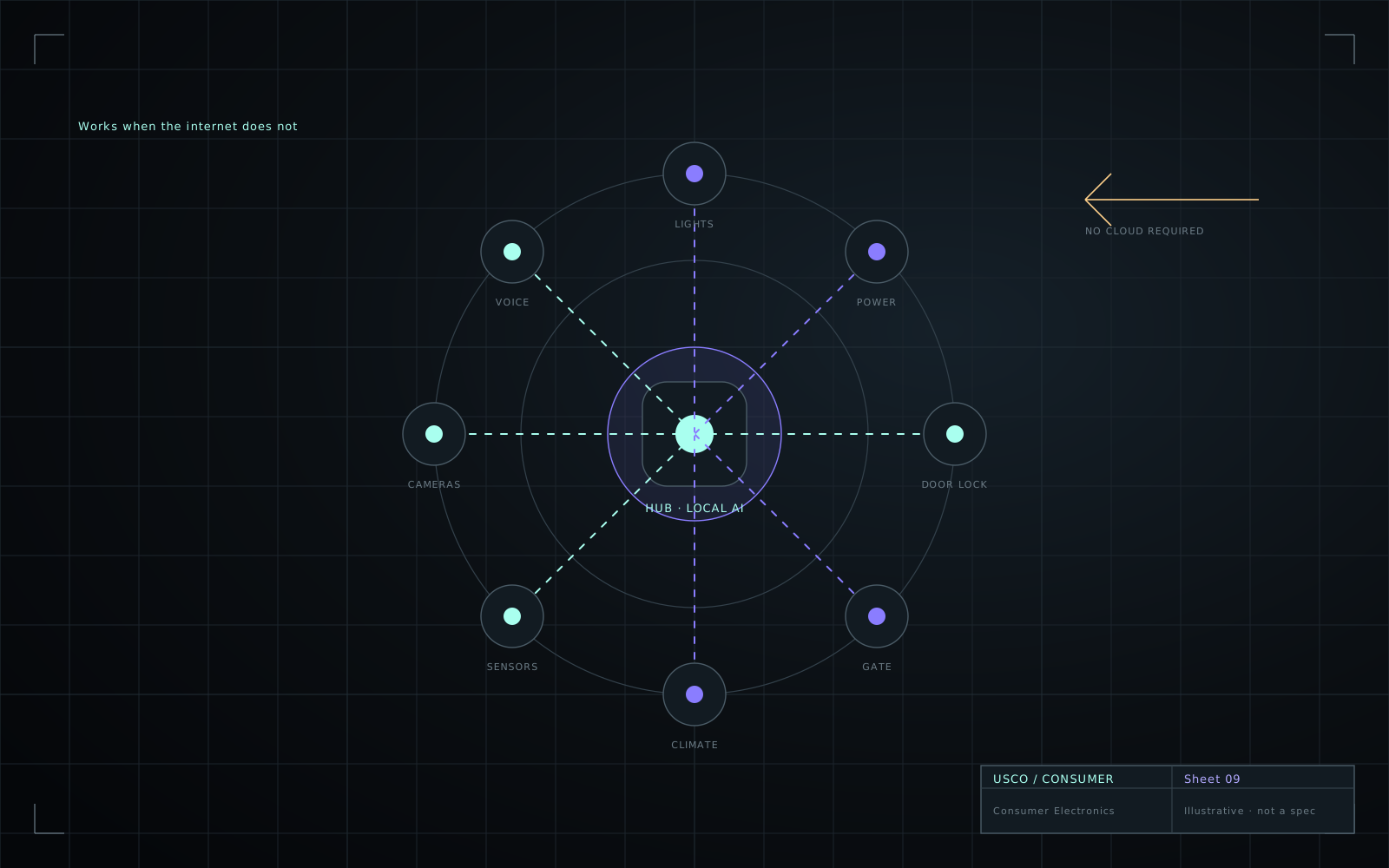
Most smart-home products assume constant connectivity and a cloud account. We design for the home you actually have: intermittent internet, shared power and a preference for keeping private information private.
The problem on the ground.
We start with what goes wrong today, not with the technology.
Cloud-first products fail offline
The light switch should not depend on a data centre.
Private data leaves the home
Voice and camera data often passes through remote servers.
Hard to install and support locally
Devices designed abroad rarely consider local service.
What we design around.
— Local-first control with graceful online extras.
— Authentication, secure updates and safe recovery after power loss.
— Electrical safety treated as a requirement, not an option.
— Clear status: RAIVA is in development, not a shipping retail product.
Relevant systems and projects.
Each one carries its real status, so you know what is built, trialled or still an idea.
How we work in this sector.
Understand the operation
We visit, observe and listen before we specify anything.
Prototype against reality
Early builds go into the real environment, with its heat, dust, power and people.
Measure and report
Results are documented, including what did not work.
Prepare for use
Documentation, serviceability and a clear statement of what production would need.