The project is part of the education.
Learners do not finish with a certificate and a worksheet. They finish with something that works, a log of what went wrong and the ability to explain both. These are the kinds of systems they build.
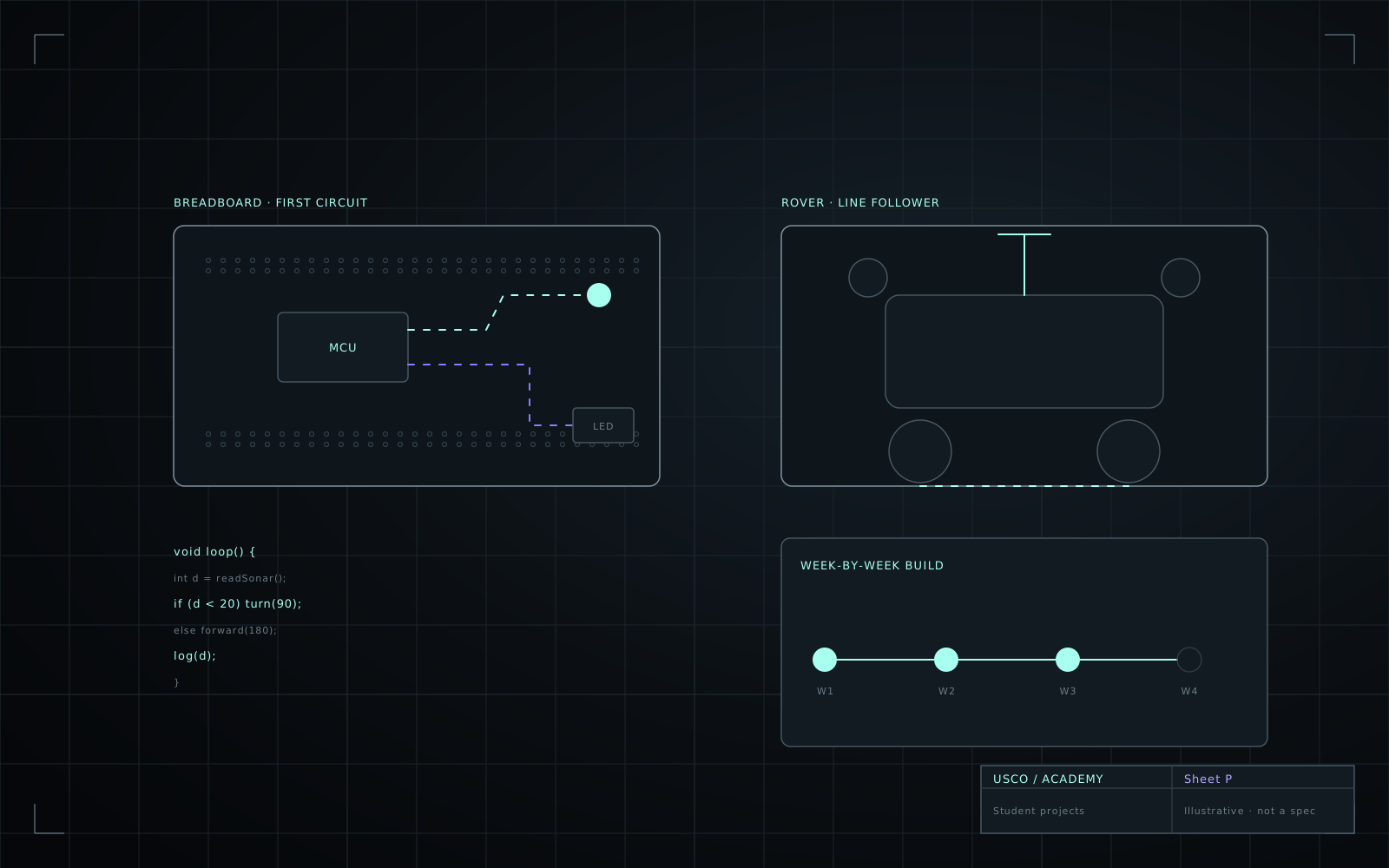
What learners build.
Eight representative projects across robotics, AI, IoT and software. Cohorts choose and adapt their own.
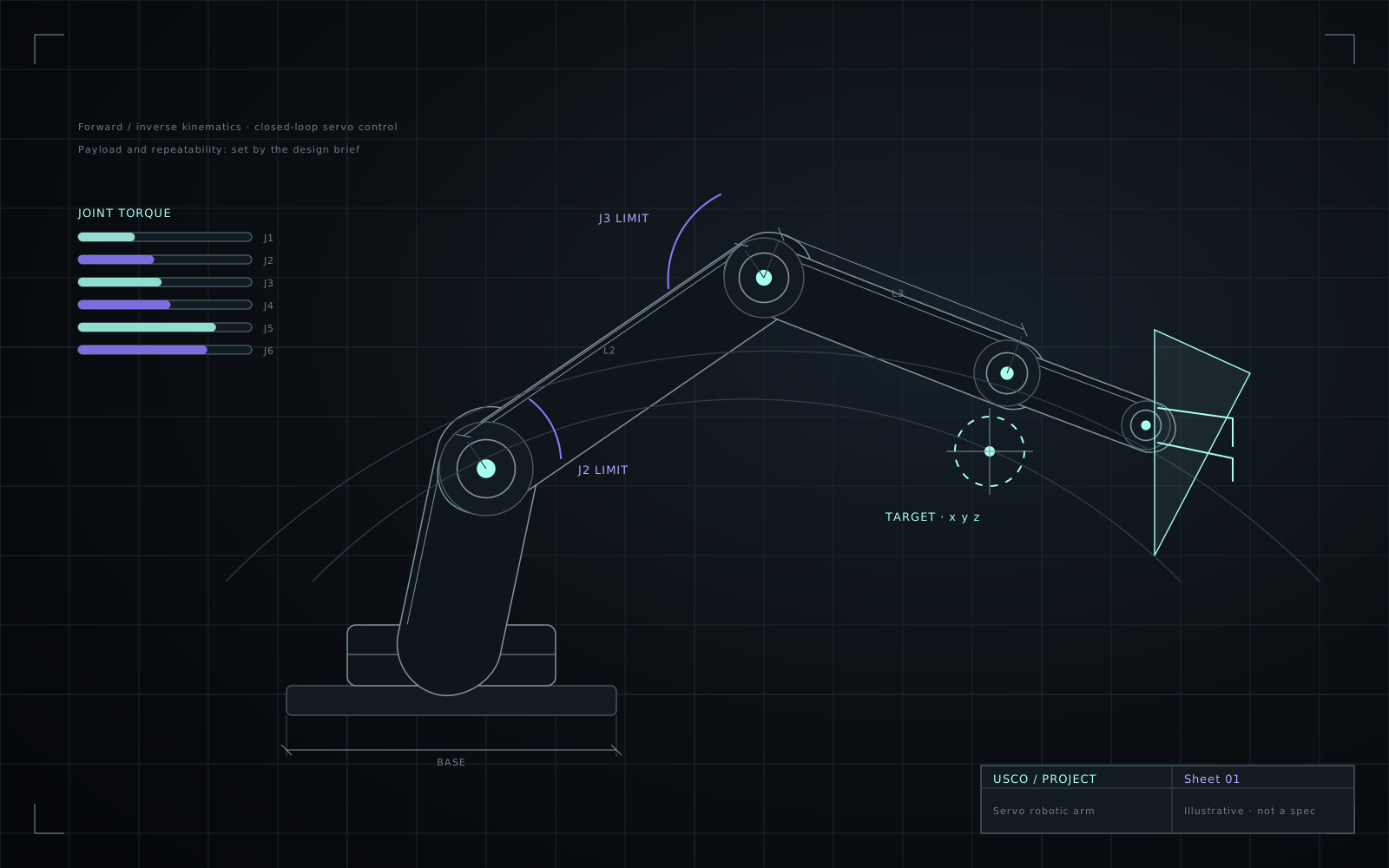
Servo robotic arm
A multi-joint arm driven by servos, controlled from a board and tuned to pick and place a light object.
Servos · microcontroller · 3D-printed links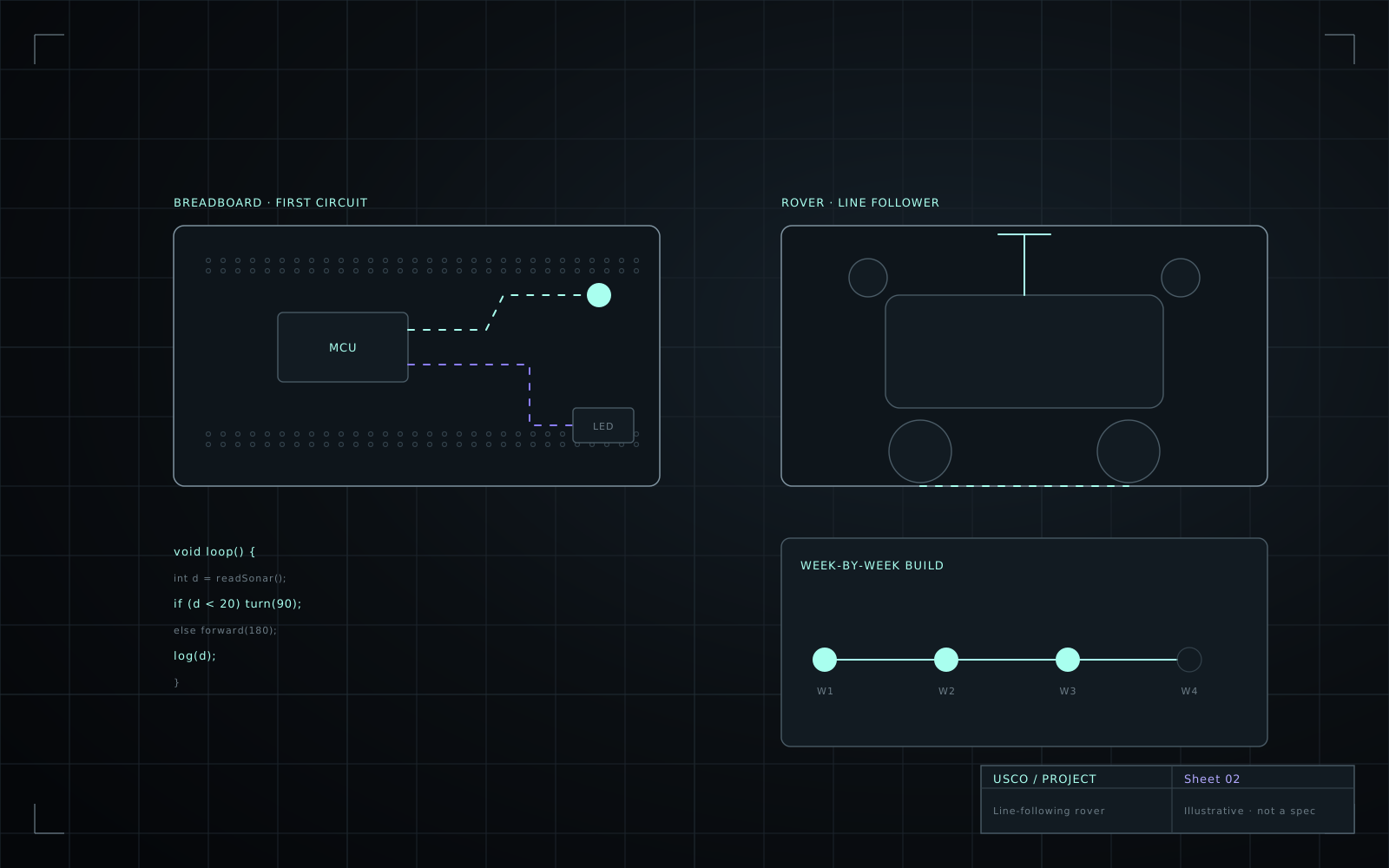
Line-following rover
A small vehicle that senses a track and corrects its own steering. The classic first control-loop project.
IR sensors · motor driver · Arduino-class board
Obstacle-avoiding robot
Ultrasonic sensing and a decision rule that stops, turns and carries on without human input.
Ultrasonic sensor · DC motors · chassis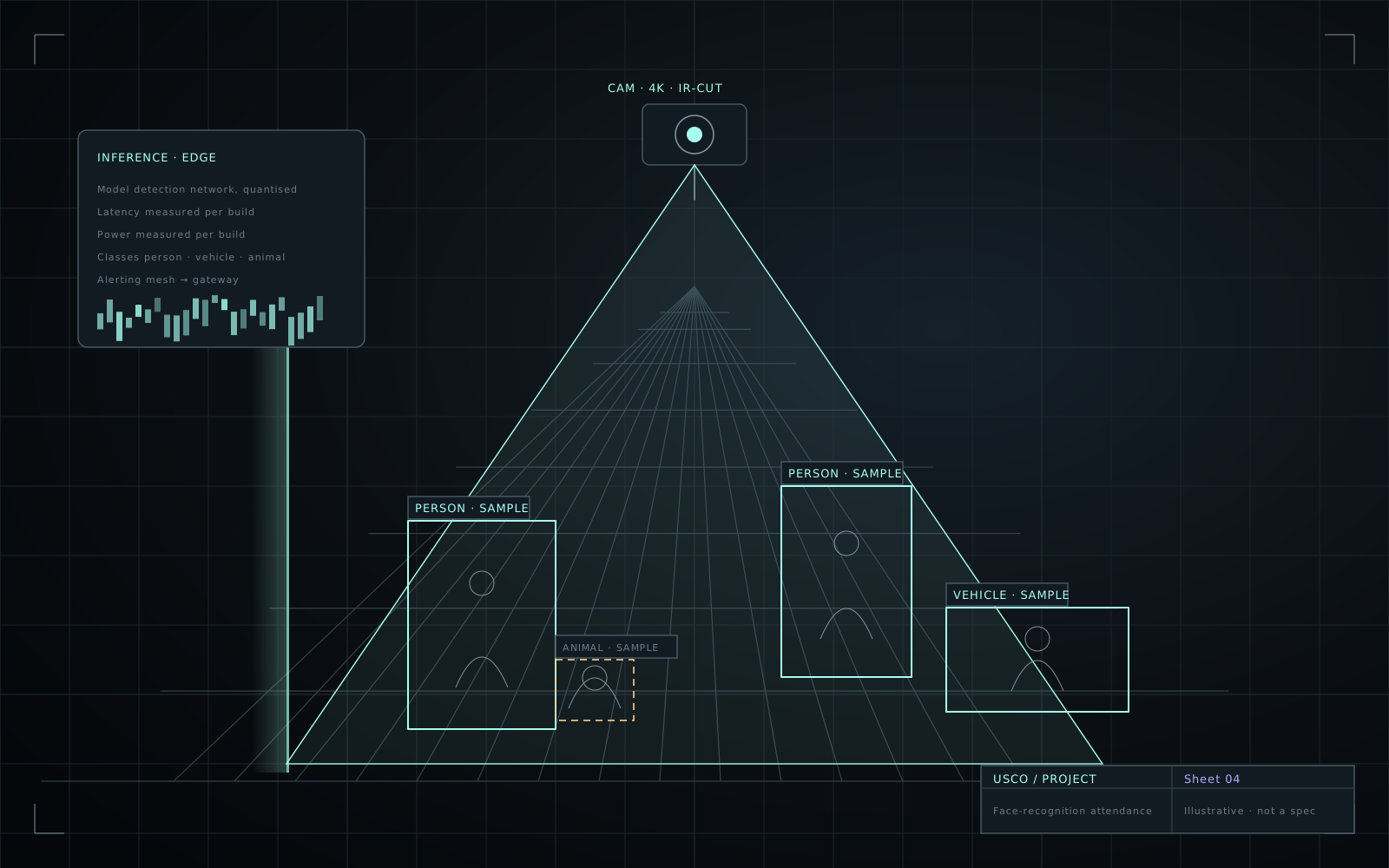
Face-recognition attendance
A camera recognises enrolled faces and records attendance. A first project in data, privacy and error rates.
Camera · Python · small computer · database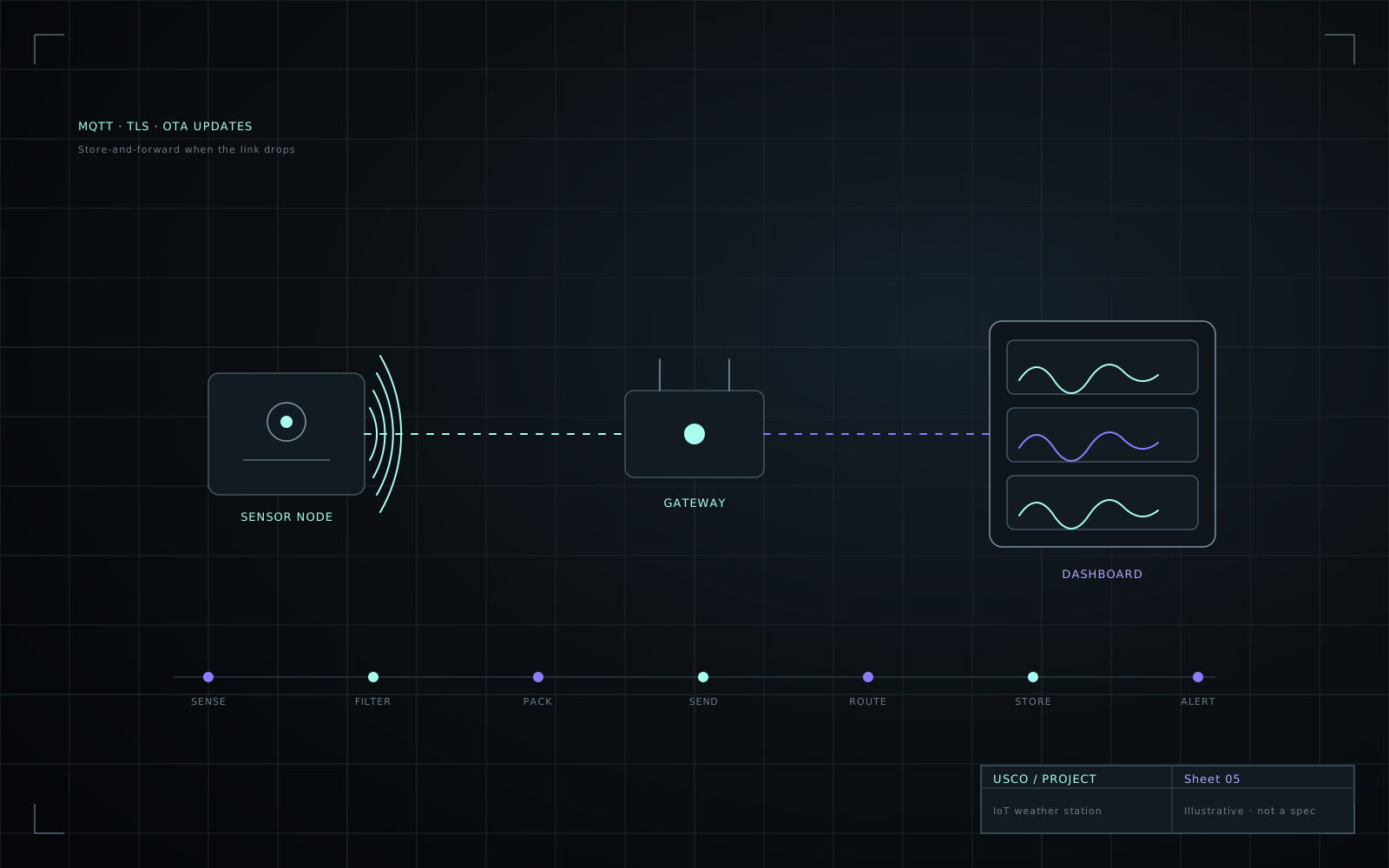
IoT weather station
Temperature, humidity and light logged and sent to a dashboard, with the offline case handled.
ESP32 · sensors · MQTT · dashboard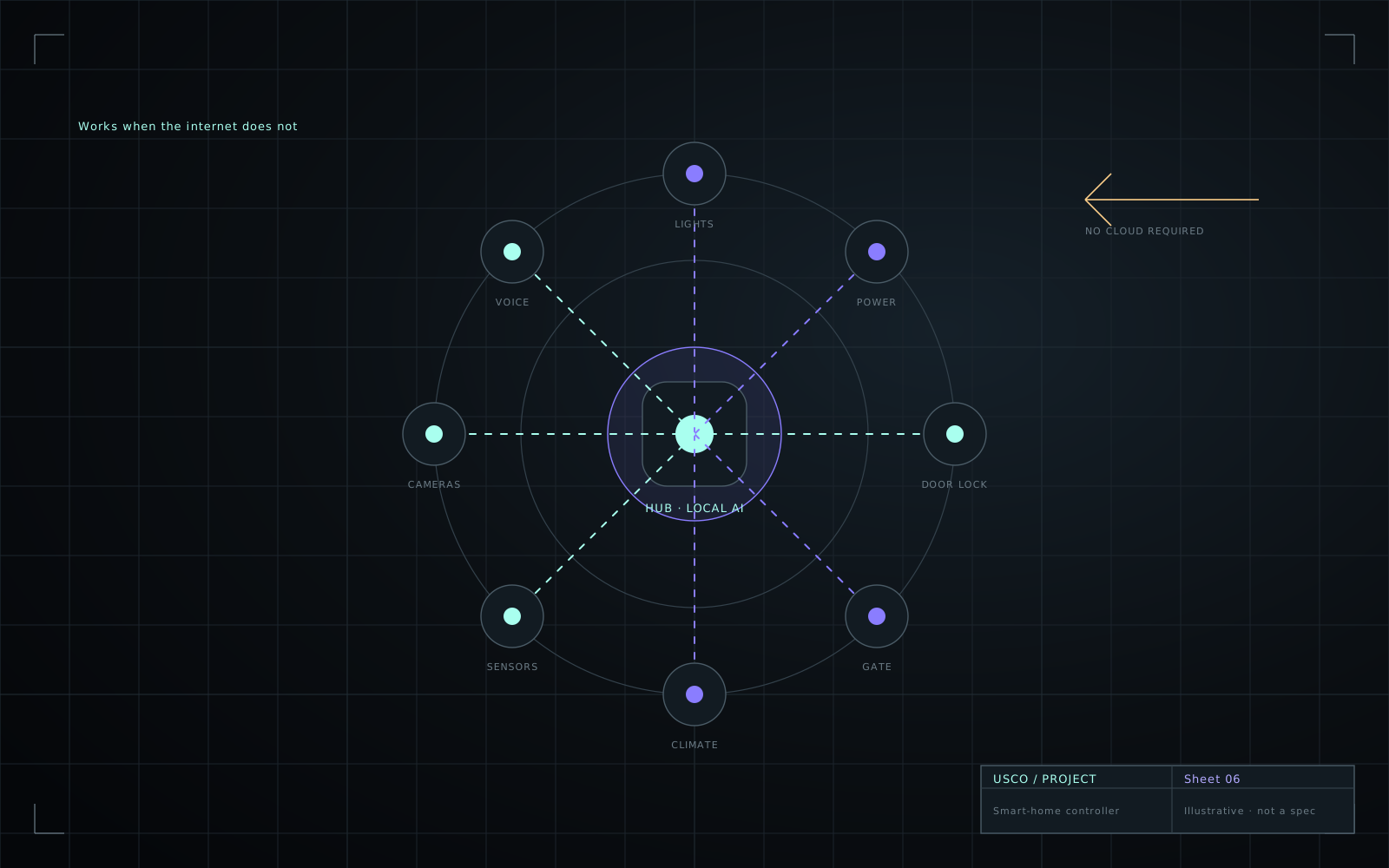
Smart-home controller
Lights and fans controlled from a phone and from sensors, designed to keep working without the internet.
ESP32 · relays · web interface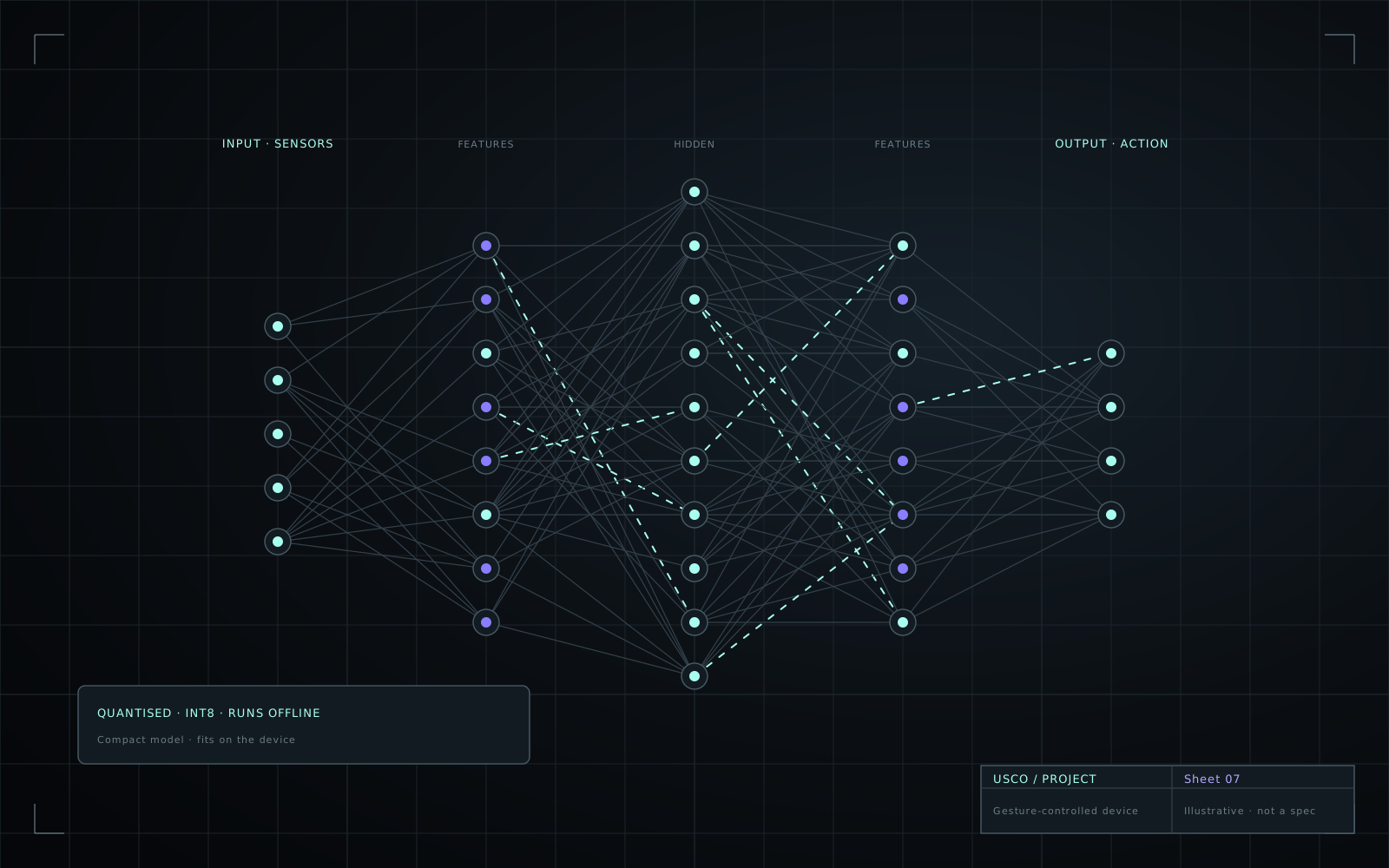
Gesture-controlled device
A model reads hand gestures from a camera and drives a physical output.
Camera · computer vision · actuator
Smart plant monitor
Soil moisture and light sensing with an automatic watering rule and an alert when something is wrong.
Soil sensor · pump · microcontrollerHow a project runs.
Pick a problem
Each learner or team chooses a small, real problem and writes what success looks like.
Plan the system
Sensors, controller, power, code. Sketch it first, then buy or print what it needs.
Build in loops
Build the smallest working piece, test it, extend it. Failures go in the log.
Test and measure
Run it repeatedly and record what it does, not what we hoped.
Present
Demonstrate the project, explain how it works and say what comes next.
What coaches look for.
Marks do not decide whether a project is good. These five things do.